
Just a quick note: some of the links in this post are affiliate links, which means if you make a purchase through them, I may earn a small commission at no extra cost to you. I only recommend products that I personally use or believe in, and your support helps keep this blog going. Thank you for being a part of my journey!

I know this blog is mostly about mental health and personal growth, but physical health isn’t separate from that. It’s deeply intertwined, influencing how we feel, think, and show up in our lives.
Now, I also know that when we’re not in a great mental health space, the last thing we want to hear is someone cheerfully suggesting we “just exercise more” or “eat some asparagus” like that’s the magical fix. I get it. I’ve been there. That’s why I want to break it down in the same way that finally helped me understand.
Some of you may already know this, but over the last couple of years, I’ve lost 90 pounds. It all started when I discovered certain food intolerances, which forced me to drastically change my diet. At first, it was just about feeling better physically—and I did. But what surprised me the most was how much better I felt mentally. First, the brain fog I’d gotten so used to started to lift. Then, it seemed like my anxiety started to lessen.
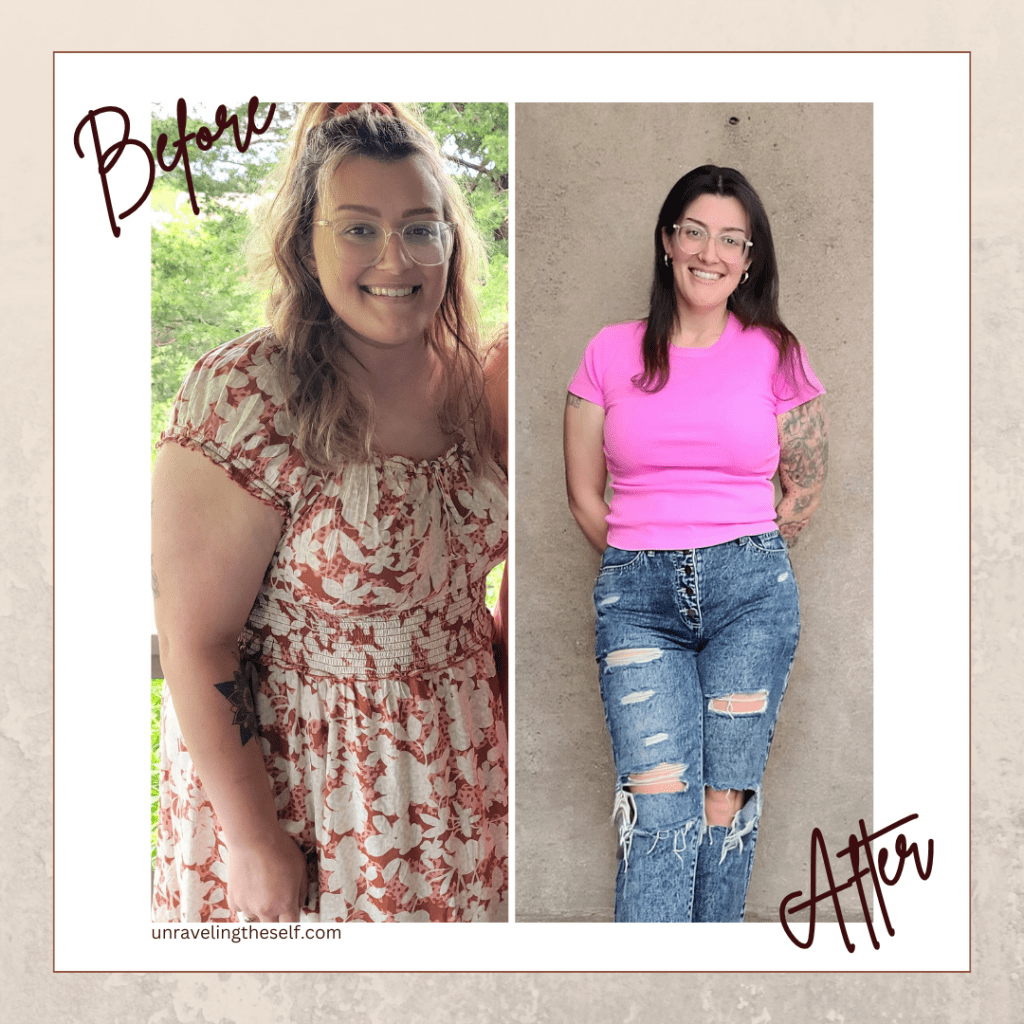
Once I realized how much of an effect food had on my mental well-being, I started noticing more shifts with every new change I made. But it hasn’t been a straight line. Last year, around the holidays, I ‘fell off the wagon.’ I was eating whatever I wanted—minus dairy and gluten because, well, my body just won’t let me. I gained a few pounds back, but more importantly, I could feel my mood slipping. The anxiety and depression I thought I’d left behind were creeping back in, and I knew deep down it wasn’t just a coincidence.
After the new year, I decided to get back on track. It didn’t happen overnight. It’s still a work in progress. But I’ve seen firsthand how much these changes matter—not just for my body, but for my mind.
So, over the next few Thursdays, we’ll be diving into how different aspects of physical health—like gut health, blood sugar, hydration, sleep, and even caffeine—impact our mental well-being. My hope is that we can work through these things together, in small doses. And maybe, by the end of these five weeks, you’ll pause and realize your mental load feels just a little bit lighter because of it.
The Gut-Brain Connection: How Your Belly Affects Your Mind
Let’s dive into the first topic—the gut-brain connection. I used to think the gut was just where food went to be digested, end of story. But it turns out, your gut is like the unsung hero of your mental health. There’s this thing called the gut-brain axis, which is basically a fancy term for the two-way communication between your brain and your gut. It’s not just your mind telling your stomach, “Hey, we’re hungry,” or “Uh-oh, that taco was a bad idea.” Your gut talks back. A lot.
Your gut is home to trillions of bacteria, collectively known as your gut microbiome. These little guys play a huge role in everything from digestion to your immune system—and yes, even your mood. Some of them help produce neurotransmitters like serotonin and dopamine, which are your brain’s feel-good chemicals. In fact, around 90% of your body’s serotonin is made in your gut. Mind-blowing, right?
When your gut health is out of whack (think poor diet, high stress, lack of sleep) it can throw off this whole system. That can lead to things like increased anxiety, mood swings, and even symptoms of depression. I had no idea how much my bloated, uncomfortable stomach was tied to my racing thoughts until I started paying attention.

So, what helps?
Probiotics and Prebiotics
Probiotics are the good bacteria that help balance your gut. You can find them in foods like yogurt, kefir, sauerkraut, kimchi, and kombucha. They support digestion, enhance nutrient absorption, and can even improve mood and cognitive function. Prebiotics, on the other hand, are like food for those good bacteria. Think fiber-rich foods like garlic, onions, bananas, and oats. They help probiotics thrive, creating a healthier environment in your gut that positively affects your mental well-being.
Methylated Vitamins
Not all vitamins are created equal, especially when it comes to how our bodies process them. Some people have genetic variations (like MTHFR mutations) that make it harder to convert certain vitamins into their active forms. This is where methylated vitamins come in. They’re already in a form your body can easily use, which can be a game changer for mental health, especially with B vitamins like methylfolate and methylcobalamin (B12).
Think of it like baking a cake. You can have all the ingredients—flour, eggs, sugar, butter—but unless you mix them together and bake them, you don’t have an actual cake. For many people, their bodies can take the “raw ingredients” (like folic acid) and process them into the “finished product” (like methylfolate) that the body can actually use. But if you have an MTHFR mutation, it’s like having all the ingredients but no oven to bake the cake. Methylated vitamins are like handing your body a fully baked cake, and it doesn’t have to do any extra work to make it usable.
An estimated 25% of the global population has some form of MTHFR mutation, meaning their bodies can’t efficiently make this conversion. Supporting your body with the right nutrients can help regulate mood, reduce brain fog, and even ease anxiety.
My husband and I take NatureGenX Methylated Multivitamin (Amazon)—check it out and see if it might work for you. We chose this one specifically for the extra vitamin D, plus it’s a bit more affordable than similar options. That said, there are plenty of great choices out there, so find what works best for you!
Reducing Gut Inflammation
Processed foods, sugar (we will deep dive into this soon), and artificial additives can cause inflammation in your gut, which affects your brain. This inflammation can disrupt the gut barrier, leading to a condition known as “leaky gut,” where toxins and undigested food particles leak into the bloodstream, triggering an immune response. This can result in chronic inflammation, which has been linked to depression and anxiety. Focusing on whole, unprocessed foods—fruits, veggies, lean proteins, healthy fats—can help calm that inflammation. Incorporating anti-inflammatory foods like turmeric, ginger, and omega-3-rich fish can also support gut health. It’s not about being perfect; it’s about making more choices that nourish rather than deplete.
I know I’ve shared a lot of information today, and it might feel overwhelming. Honestly, I know how I would’ve reacted if I’d heard all of this back when I was trying to start my journey—especially during my more cynical era. That’s why I want this to be a space where it’s okay to ask questions, express doubts, and have real conversations. Over the next four weeks, we’ll dive into specific dietary changes I’ve made, or am still working on. It won’t be all big words and statistics (though there will be some), but my goal is to keep it relatable, manageable, and grounded in real-life experiences.
Let’s see where this takes us.
With love & light,
Jessica ♡
Disclaimer: I’m not a medical professional. The information I’m sharing is based on my personal experiences and research. Before making any changes to your diet, supplements, or health routine, please consult with your doctor or a qualified healthcare provider to ensure it’s right for you.
 Unraveling the Self
Join the conversation