

Josh recently came across a set of personality assessments, part of something called Positive Intelligence, developed by Shirzad Chamine. I’m a sucker for a self-assessment test of any sort. So he already knew I was down. One of the key tools is the Saboteur Assessment, a short quiz that identifies which internal “saboteurs” are the most active in your mind. These saboteurs are the automatic thought patterns we develop to protect ourselves, ways of thinking that may have once helped us cope but now tend to hold us back.
There are ten saboteurs total, each with their own voice and strategy. Some pressure you to achieve constantly. Others push you to please, control, avoid, or catastrophize. They often sound helpful at first, like caution or logic, but they come at the cost of peace, clarity, and connection. Their influence is subtle, and they often speak in your own voice, which makes them difficult to notice, until someone hands you a list and says, “Hey, which of these sound familiar?”

It’s not always easy to name the parts of ourselves we’d rather not acknowledge. In fact, it can feel counterintuitive. Why poke around in the darker corners if things seem mostly functional on the surface? But if you’ve ever done shadow work (consciously exploring the hidden or rejected parts of yourself) you know it’s rarely a one-and-done process. There’s always something new to face, some habit or wound quietly shaping how you move through the world.
This quiz won’t do the heavy lifting for you, but it does offer a kind of outline. A starting point. If you’re someone who likes a little structure in your self-work, it can be oddly helpful. And if you’ve been on a growth path for a while, it might also surprise you. You may find certain saboteurs quieter than they used to be. Others, louder than expected. Either way, it’s a check-in worth considering.
What I appreciated most is that it gave language to things I’ve sensed but hadn’t quite put a name to. That moment of “oh, that’s what that is” can be weirdly grounding. Because once you see it clearly, it’s harder to let it keep running in the background.
We both took the test, naturally. That’s usually how these things go. One of us finds something interesting, the other is pulled in with a vague promise of “It’ll only take a few minutes,” and suddenly, we’re in the middle of a quiet existential audit at the kitchen table. Some results weren’t surprising, but some I’d rather not have seen in writing.
My top two saboteurs were Avoider and Victim, tied. Avoider made perfect sense. I’ve always known I tend to sidestep discomfort, even when I know it’ll only grow louder the longer I ignore it. And it’s something I’ve actively been working on, even more so now. But Victim surprised me. Not because it didn’t fit, but because I didn’t want it to. It felt like being called out for a story I didn’t realize I’d been telling. That slow, inner narrative of powerlessness, of feeling unseen and quietly misunderstood. It’s not exactly flattering, and it did sting a little.
That’s the point of these assessments, though. They don’t reveal anything brand new. They just say the quiet parts out loud in a way that’s hard to argue with. And once you’ve named a pattern, it gets harder to let it run the show unnoticed.
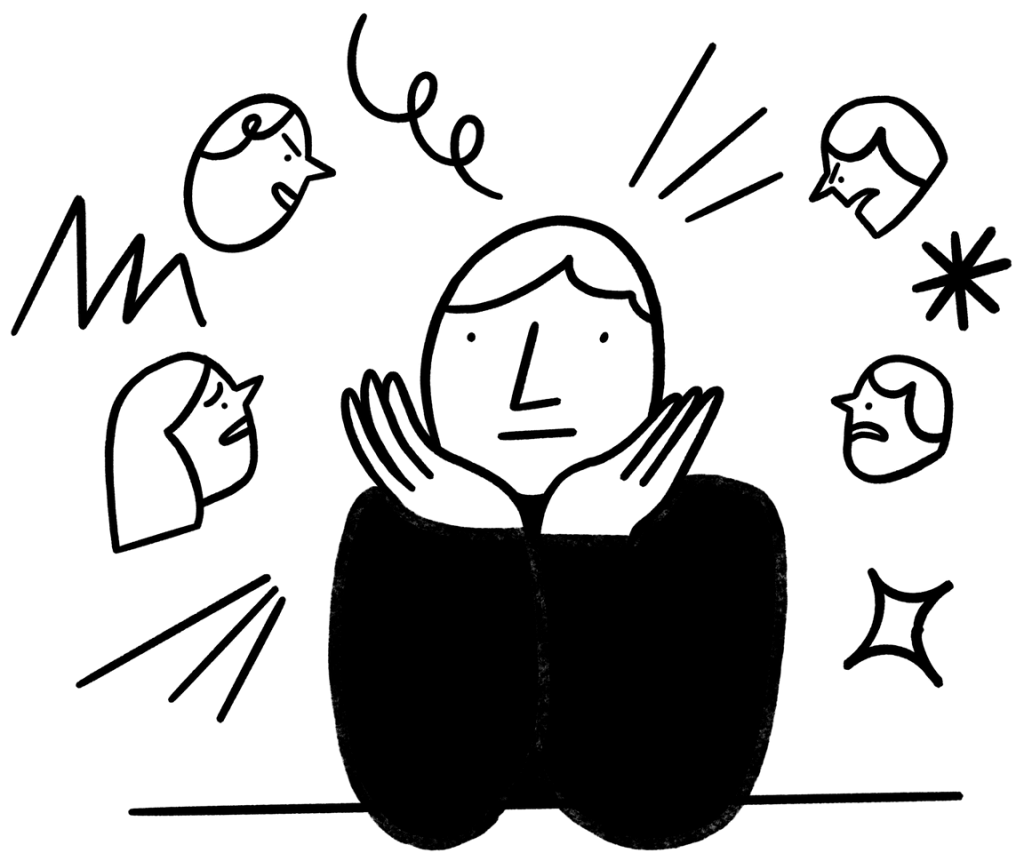
In Chamine’s Positive Intelligence framework, our saboteurs are the habitual mental reactions we developed to cope and protect ourselves. They’re not inherently malicious. They started as survival strategies. But over time, they tend to take over. The more space they occupy, the more they keep us from responding with curiosity, calm, or clarity.
The opposite of a saboteur is what he calls the Sage. Where saboteurs judge, control, or retreat, the Sage seeks insight. It doesn’t panic or spiral. It pauses and chooses. Learning to recognize the difference isn’t something a ten-minute quiz will teach you, but it’s a place to begin.
If you’re interested, you can take the Saboteur Assessment here. It’s free, quick, and a little unsettling in the best way. Just be warned: you might learn something about yourself you didn’t want to see. But chances are, it’s been there all along.
That said, it’s not all doom and inner drama. Seeing your saboteurs doesn’t mean you’re broken. It means you’re paying attention. And once you’re paying attention, you get to choose something different. That’s the part I’m learning to lean into, not the voice that says “here’s everything wrong,” but the one that reminds me there’s more than one way to live. Even peace is a habit you can build.
With love & light,
Jessica ♡
If you take the test, I’d love to hear about it! What results surprised you or didn’t? How do you feel like this will help you “catch” your saboteurs in action? Remember, this is another tool for growth, not a determination of your worth.
 Unraveling the Self
Join the conversation