
Winter has officially settled in where I live, and with the snow piling up outside and the colder days keeping us indoors, I’ve found myself spending more time at home than ever. I’m sure you can relate, winter has a way of slowing everything down and giving us space to think. It’s easy to get caught up in the hustle and bustle of everyday life, but with the quieter days, I’ve been reminding myself more than ever to stay present during the everyday, mundane moments, whether it’s washing dishes, playing with my kids (even though I’m always doing it wrong), or simply enjoying a warm cup of tea. These little moments are where mindfulness truly lives, and I’ve been leaning into them more these days.
For a long time, I was deeply interested in meditation and had heard so much about the transformative power of being present, of mindfulness, and I knew I wanted to explore it more. At the time, I didn’t have a solid practice of my own, but I was open to learning, soaking up any information I could find.

One afternoon, we were getting ready to have dinner at my aunt and uncle’s house. I remembered a previous conversation with my aunt where she had mentioned that my uncle practiced Buddhism. This sparked something in me, so that evening at dinner, I took the chance to ask him more about his practice. I was curious—what was it like? How did he meditate? What did it mean for him?
That’s when he told me: “It’s actually Zen Buddhism,” he said, “and it’s not really about religion, it’s more about living mindfully, about being present in each moment.” This really resonated with me. I had already been diving into meditation, but I hadn’t yet explored Zen in any depth. Hearing him speak about it felt like a key turning in my mind.
Our conversation continued, and I shared my growing interest in meditation and mindfulness. Before we left that night, my uncle handed me two books to read: The Illustrated Book of Zen and Why Buddhism is True. I was excited—this felt like a sign, a new direction on my journey. Over the next couple of weeks, I dove into both books.
The Illustrated Book of Zen by James Harrison is a great introduction to Zen Buddhism, especially if you’re new to the practice or just looking for a deeper understanding. It blends beautiful illustrations with clear, straightforward explanations of Zen principles and meditation techniques. I really appreciated how the book doesn’t just dive into philosophy but also offers practical advice on how to bring Zen into everyday life. It gave me some really helpful insights that I could start using right away to be more present and mindful. Whether you’re just starting your journey or looking to learn more, this book is a perfect place to start.
Why Buddhism is True by Robert Wright is a thought-provoking and insightful book that really changed the way I think about mindfulness and meditation. Wright takes a deep dive into the science behind why Buddhist teachings—particularly mindfulness—actually work, and how they can help us better understand our minds. He does a fantastic job of blending psychology, neuroscience, and philosophy, while still keeping things accessible. What I found most valuable was his honesty about his own struggles with meditation—it really helped me understand that mindfulness isn’t something you can just “get” overnight; it’s a slow, steady practice. If you’re curious about how mindfulness fits into modern science or if you’re looking for a more intellectual take on Buddhism, this book is a great read.
Reading these books, I felt like I had just uncovered a new layer of understanding. Zen wasn’t just about meditation; it was about integrating mindfulness into every part of life. It was about finding peace in the small, mundane moments and being fully present, no matter what life threw my way.
What is Mindfulness?
Mindfulness, at its heart, is about being fully present—just here—without the distractions of the past or future. It’s easy to get caught up in the whirlwind of our busy lives, where we’re either replaying old conversations in our heads or worrying about what’s coming next. But mindfulness offers us a way to step out of that cycle, inviting us to simply focus on the now, whether it’s noticing the cool breath entering your body, feeling your feet grounded on the floor, or hearing the birds outside your window.
And here’s the thing: mindfulness isn’t just something you “do.” It’s a way to live. It’s about tuning in to what’s going on around you and within you, without the need for judgment or reaction. No need to try to clear your mind or make everything perfect. Mindfulness is more about getting curious and letting things unfold just as they are. It’s about being present with whatever comes up, and accepting it for what it is—no pressure.
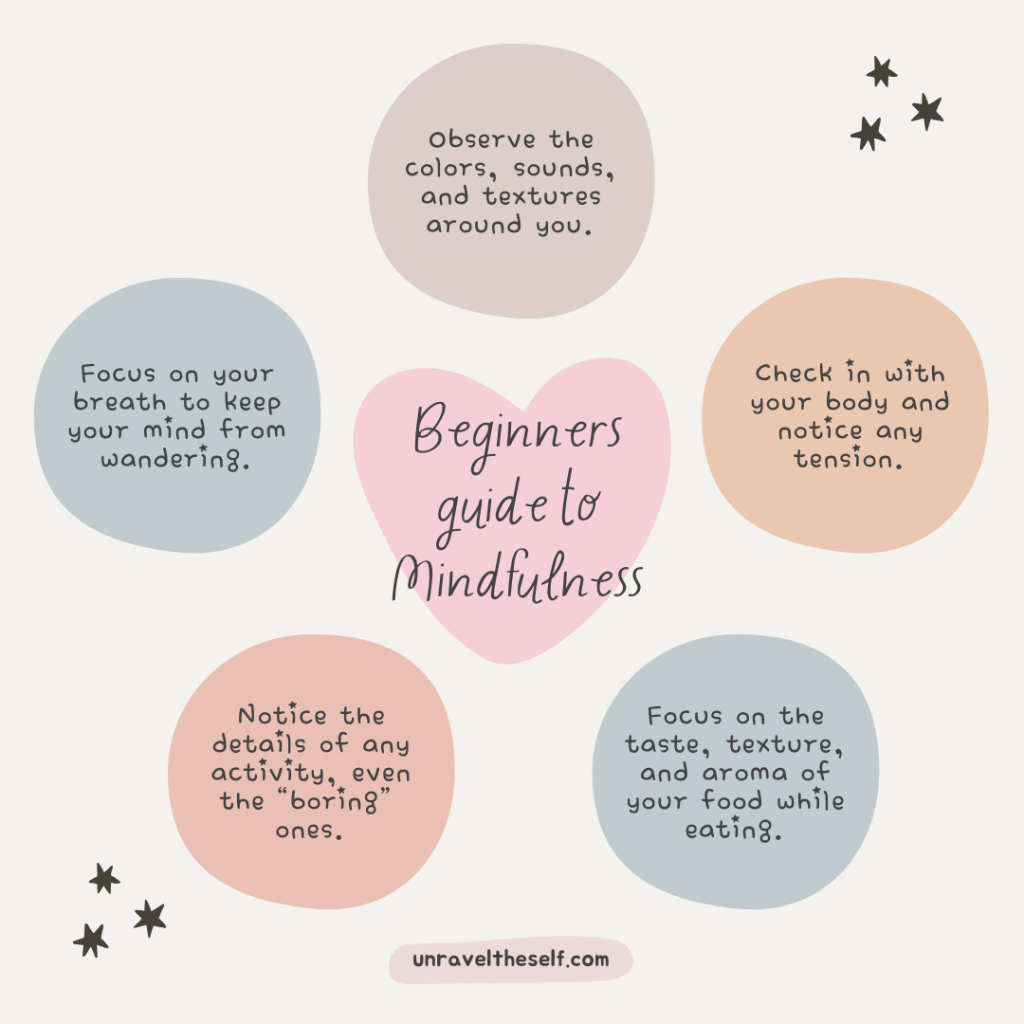
How to Start Practicing Mindfulness Today
Starting a mindfulness practice doesn’t require a lot of time, fancy tools, or complicated rituals. You can begin right now, wherever you are. Here are a few simple steps to get started:
- Focus on Your Breath
One of the easiest ways to begin practicing mindfulness is by focusing on your breath. Take a moment, close your eyes, and just breathe naturally. Feel the sensation of the air as it enters and leaves your body. Notice the rise and fall of your chest or belly. When your mind starts to wander (and it will!), gently bring your attention back to your breath. This can be done for just a minute or two, or longer if you’re comfortable. The goal is to bring your awareness back to the present moment. - Notice Your Surroundings
Mindfulness can also be practiced through simple observation. Wherever you are, take a moment to really see your surroundings. What colors are present? What sounds can you hear? What textures can you feel? Just notice, without labeling or judging. It’s about engaging with the world around you and becoming fully aware of the details you often overlook. - Body Scan
A great way to check in with your body and bring your awareness to the present moment is through a body scan. Starting from the top of your head, slowly bring your attention to each part of your body. How does it feel? Are there areas of tension or discomfort? Allow yourself to simply notice these sensations without trying to change anything. This practice helps you become more attuned to your physical body and its needs. - Mindful Eating
One simple way to practice mindfulness is through eating. Instead of rushing through your meal, try to slow down and really pay attention to the taste, texture, and aroma of your food. Chew slowly and notice how each bite makes you feel. This is a simple yet powerful way to engage in mindfulness throughout your day. - Mindfulness in Daily Activities
Mindfulness doesn’t have to be limited to quiet moments or meditation sessions. You can practice it during your daily activities—whether you’re washing dishes, taking a walk, or folding laundry. The key is to bring your full attention to what you’re doing and be present in the moment. Notice the small details and immerse yourself in the task at hand.

So, here’s the thing: mindfulness isn’t something that magically clicks into place overnight. It’s a practice, not a quick fix. But that’s kind of the beauty of it—you get better at it by showing up, little by little. The more you make space to just be with your thoughts, without judging or trying to change them, the easier it gets to stay present. And honestly, there’s no right or wrong way to practice. Whether you’re sitting still for a few minutes or just taking a deep breath in the middle of a crazy day, it’s all part of the process. So, why not start today? Take a moment, even if it’s just one, to pause and notice what’s happening around you. That’s the beginning. And from there, who knows what might unfold.
Remember, every little step counts, and you don’t have to do it perfectly. If you’re ready to start your mindfulness journey, I’m cheering you on! Drop a comment below or reach out—I’d love to hear how it’s going for you. We’re all on this path together, and I’m excited to see what unfolds when you start showing up for yourself. Let’s take this one mindful step at a time!
With love & light,
Jessica ♡
 Unraveling the Self
Leave a reply to Overthinking Everything (Including This Title) – Unraveling the Self Cancel reply